Project overview

Behind the Collection

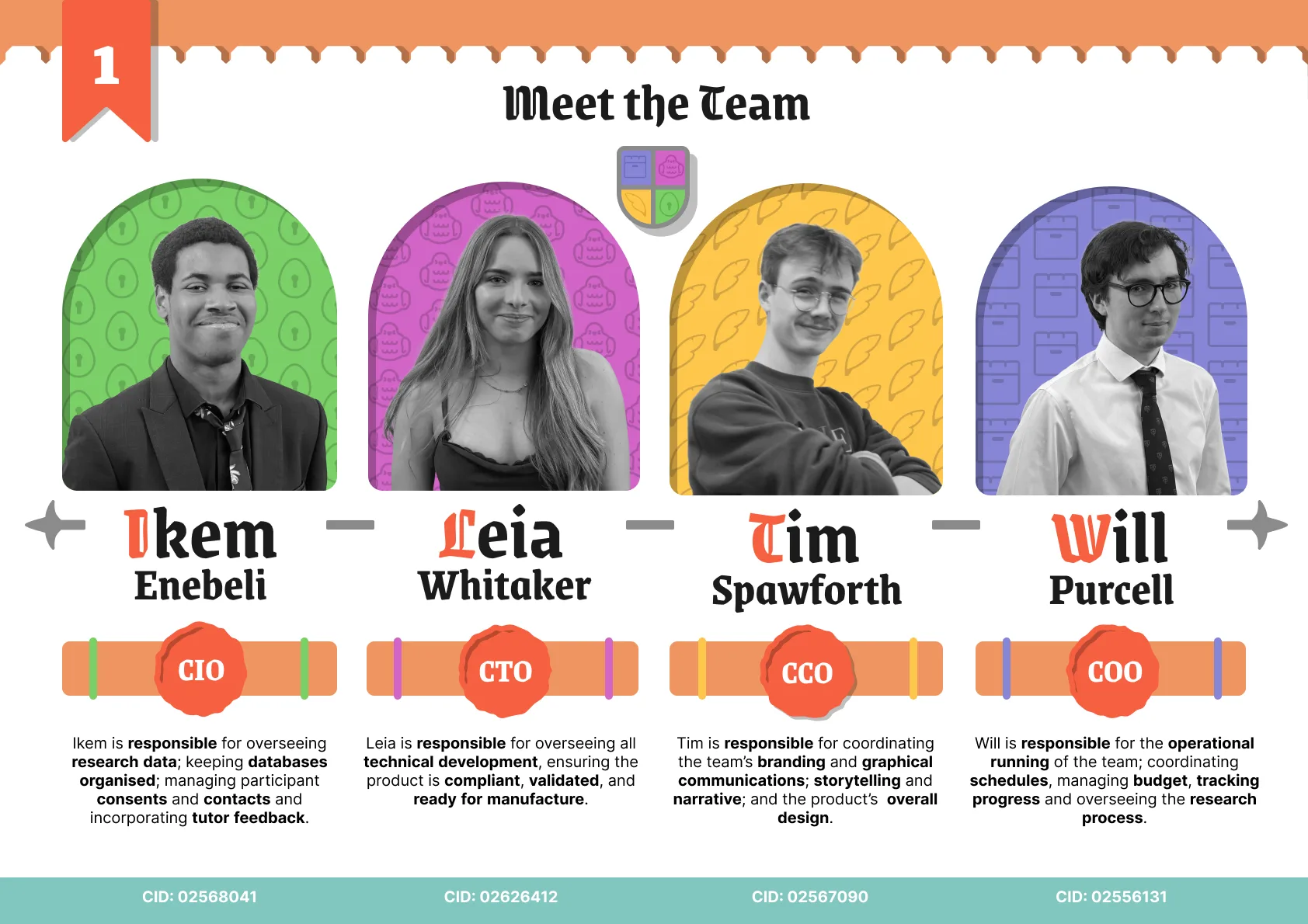
Meet the team: Ikem Enebeli (CIO, research data and outreach), Leia Whitaker (CTO, technical development), Tim Spawforth (CCO, communications and branding) and Will Purcell (COO, operations and planning).
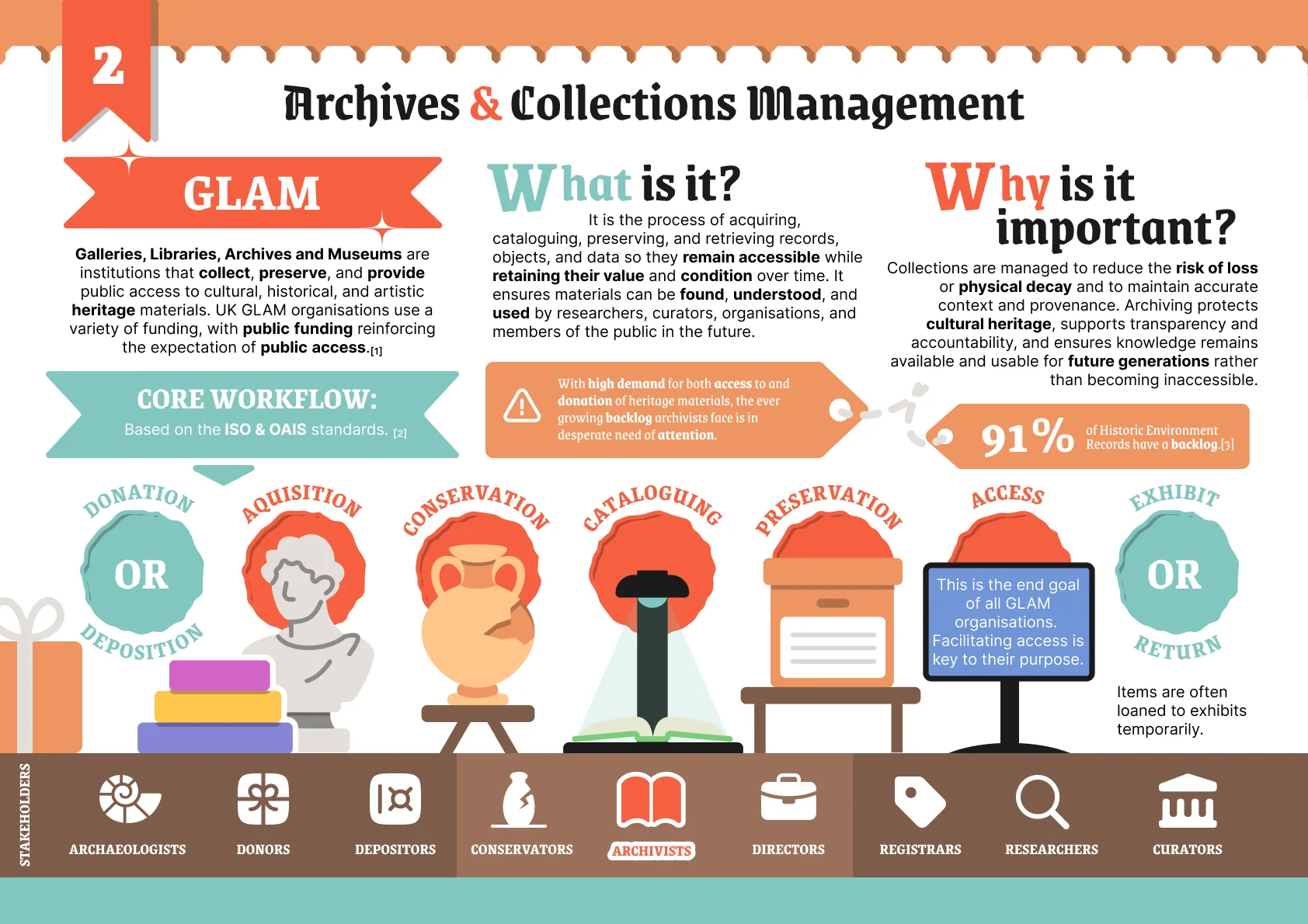
Archives and collections management in GLAM organisations: what it is, why it matters, the core workflow from acquisition to access, the stakeholders involved, and the fact that 91% of Historic Environment Records have a backlog.
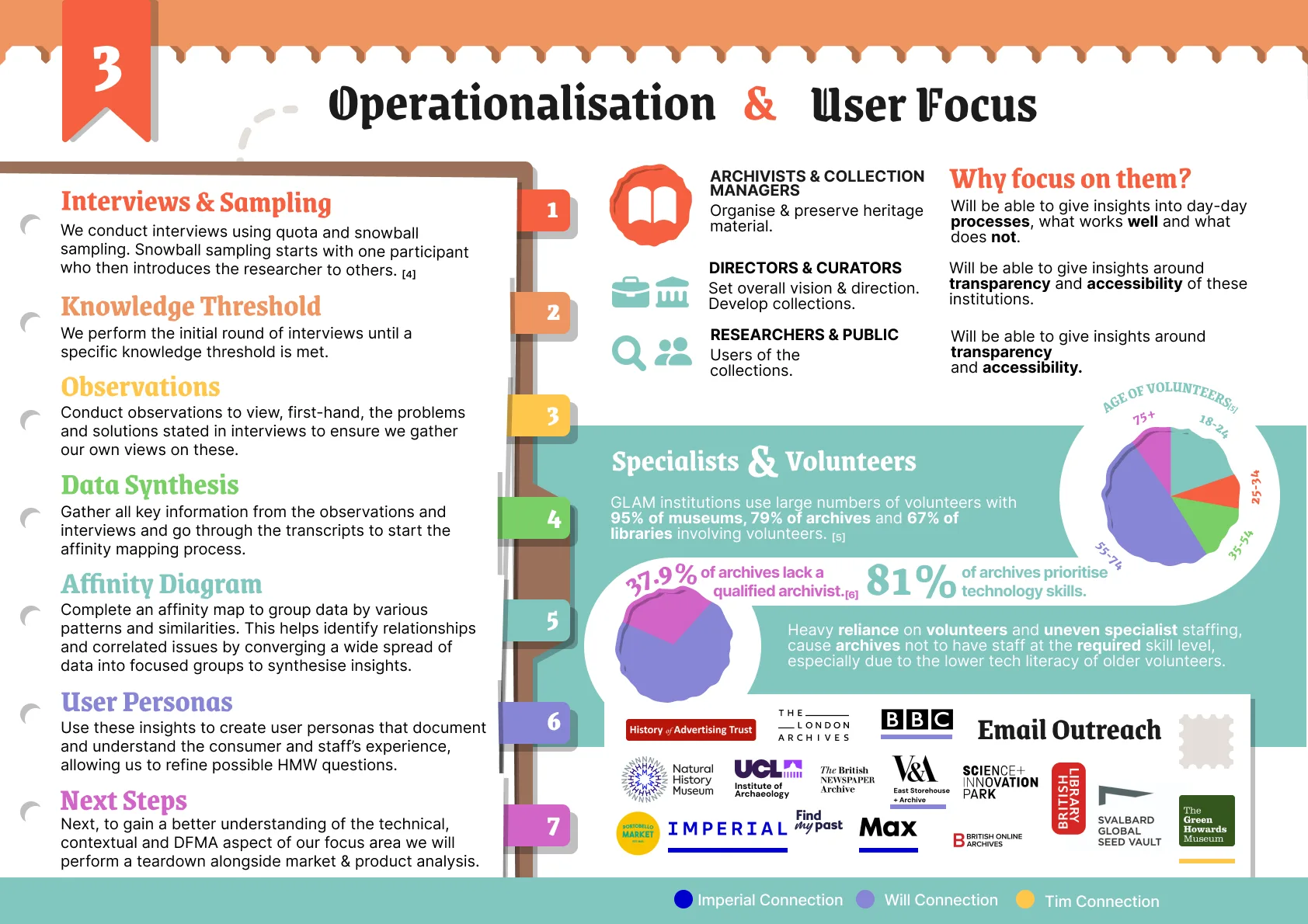
Operationalisation and user focus: interviews and snowball sampling, knowledge thresholds, observations, data synthesis, affinity diagrams and user personas, with a focus on archivists, collection managers, specialists and volunteers.
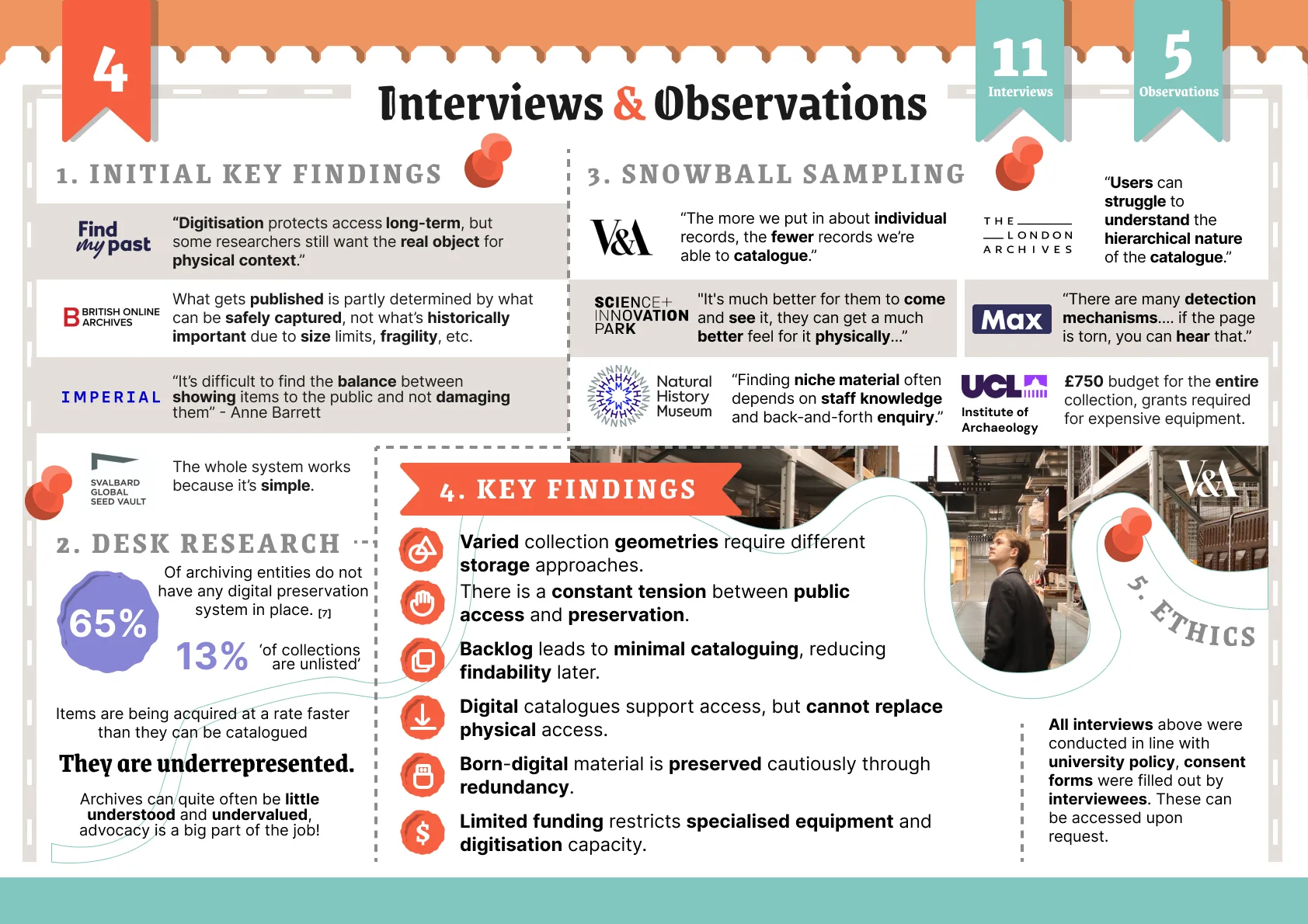
Interviews and observations: initial key findings, desk research, snowball sampling with organisations such as the V&A, Natural History Museum and UCL Institute of Archaeology, ethics, and key findings about backlogs, storage and digitisation.
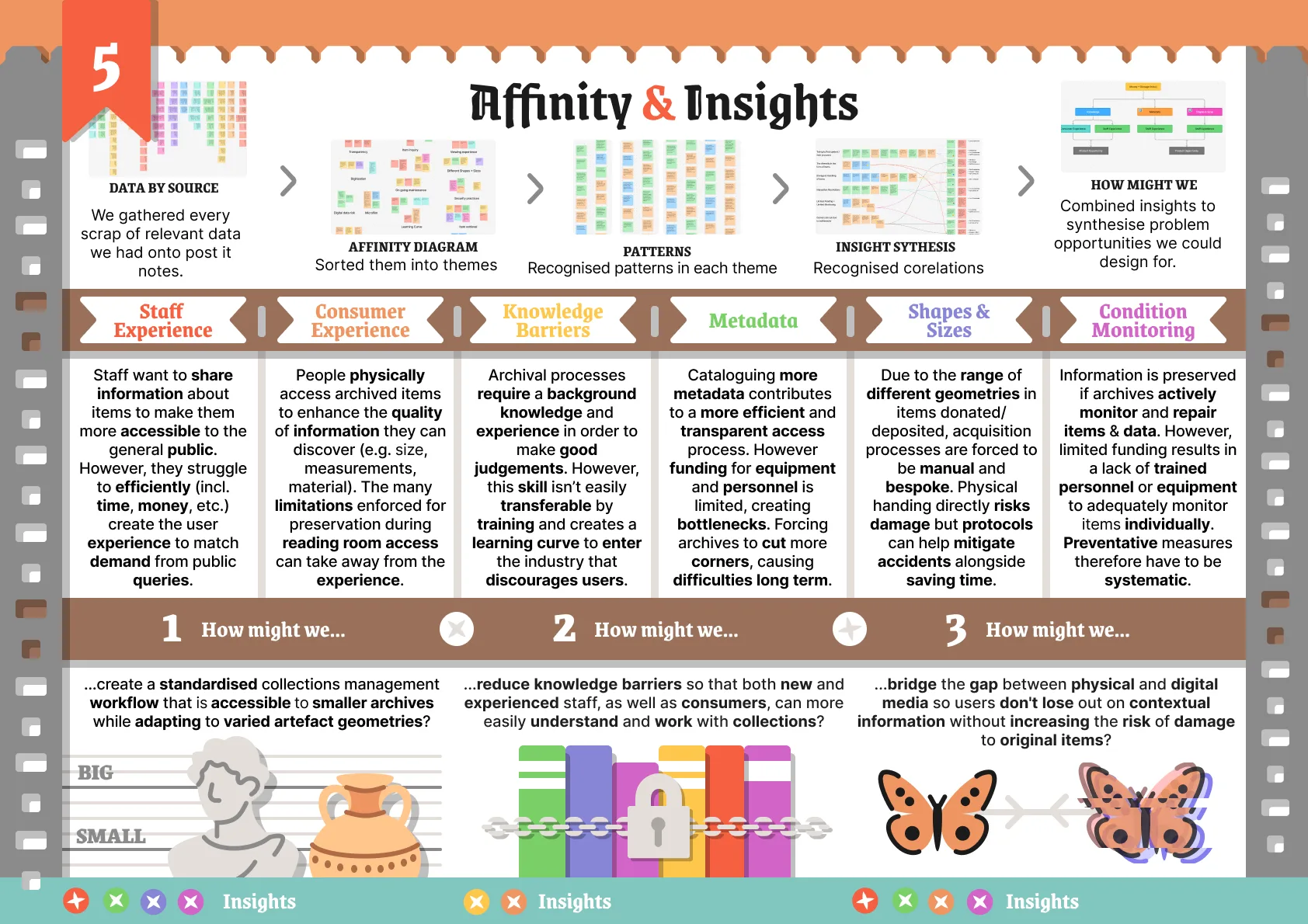
Affinity mapping and insights: every relevant piece of data sorted into themes such as staff experience, consumer experience, knowledge barriers, metadata, shapes and sizes and condition monitoring, leading to three How Might We questions.
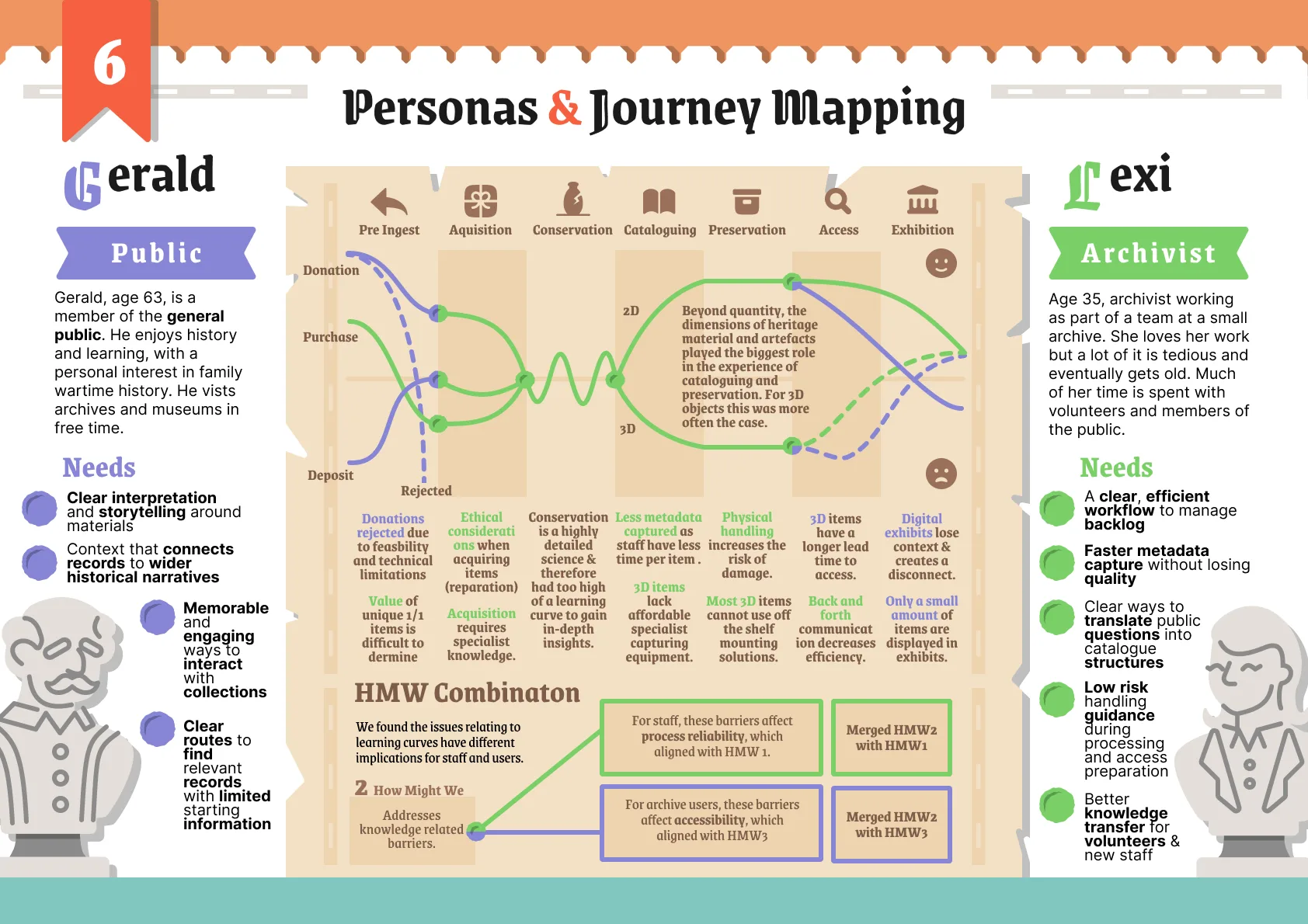
Personas and journey mapping: Gerald, a member of the public, and Lexi, an archivist, mapped across the collection workflow from pre-ingest to exhibition, with pain points and combined How Might We statements.
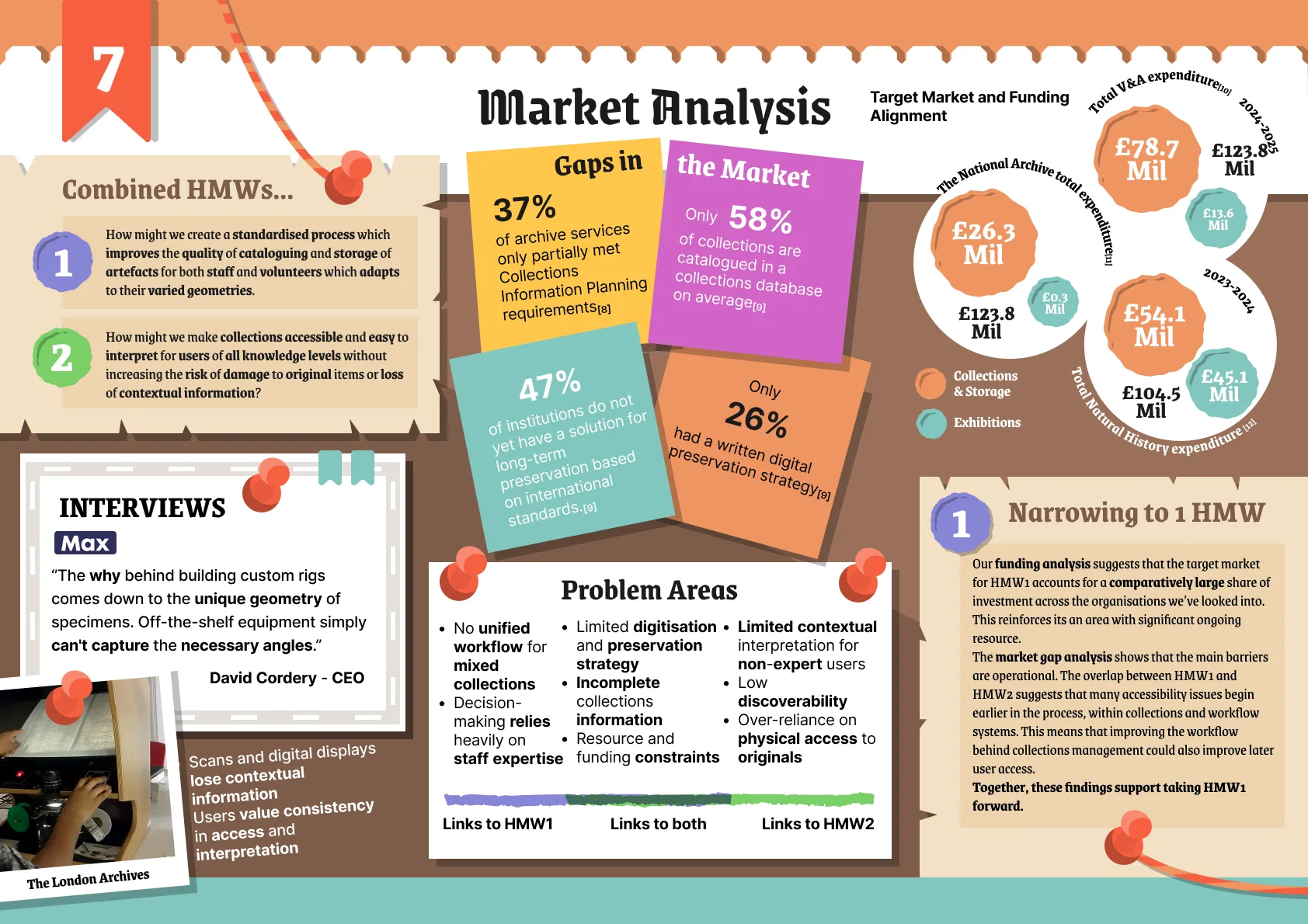
Market analysis: combined How Might We statements, gaps in the market, problem areas, an interview with the CEO of The London Archives, and target market and funding alignment across major institutions.
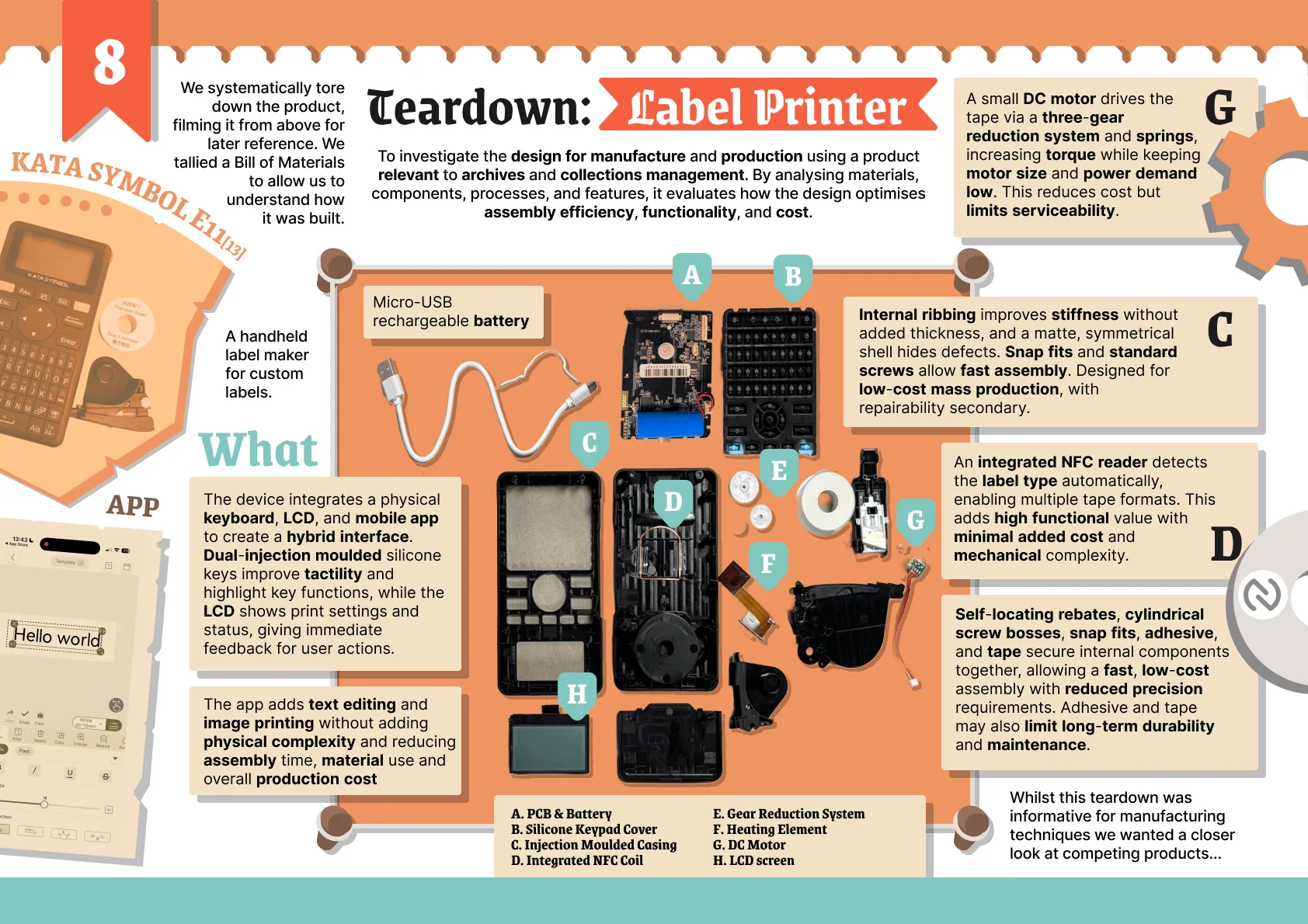
Teardown of a handheld label printer, examining its PCB and battery, keypad, casing, NFC coil, gear reduction, heating element, DC motor and screen to inform design for manufacture.
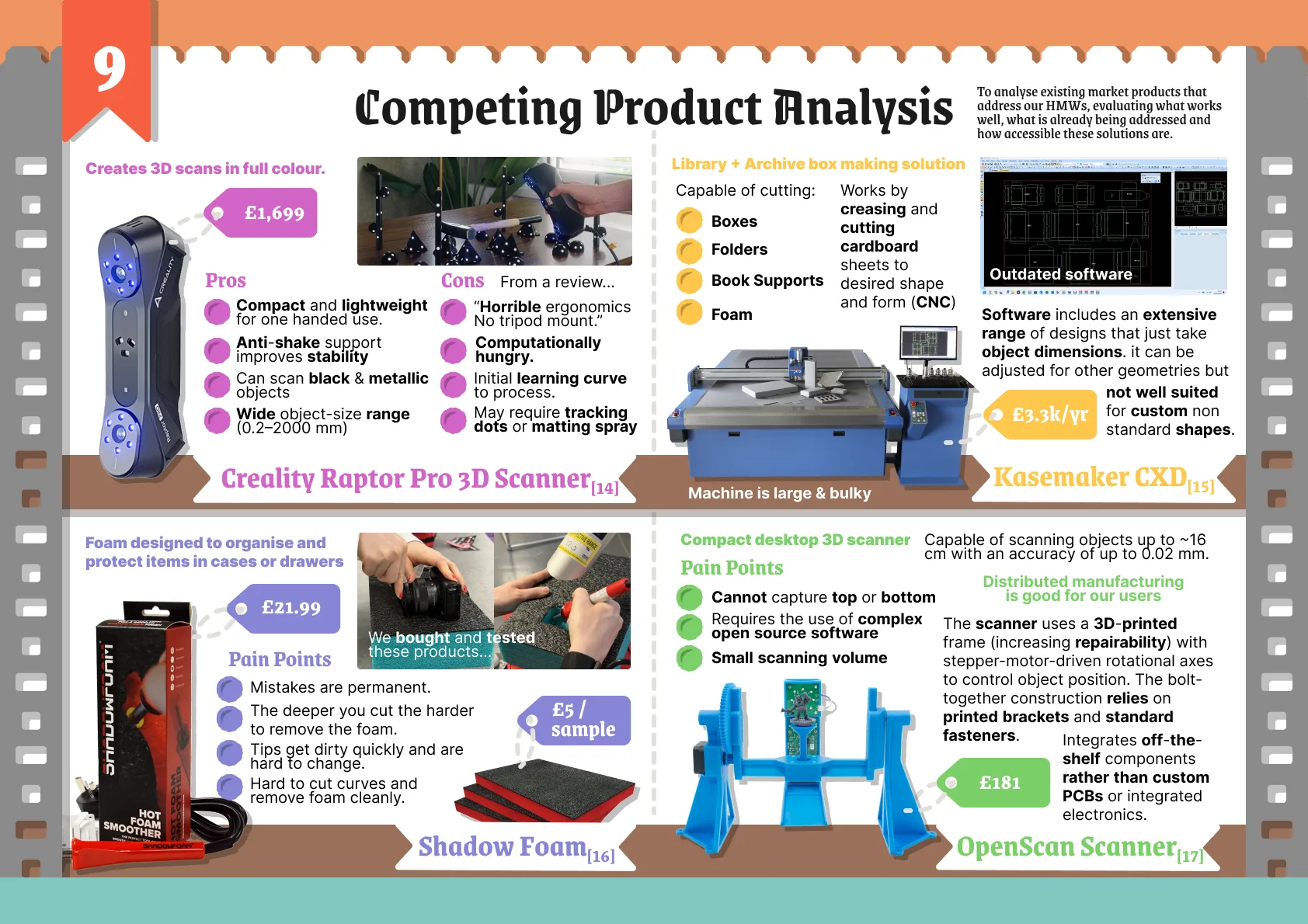
Competing product analysis of a 3D scanner, a box-making machine, Shadow Foam and an open-source scanner, with the pros, cons and pain points found by buying and testing them.
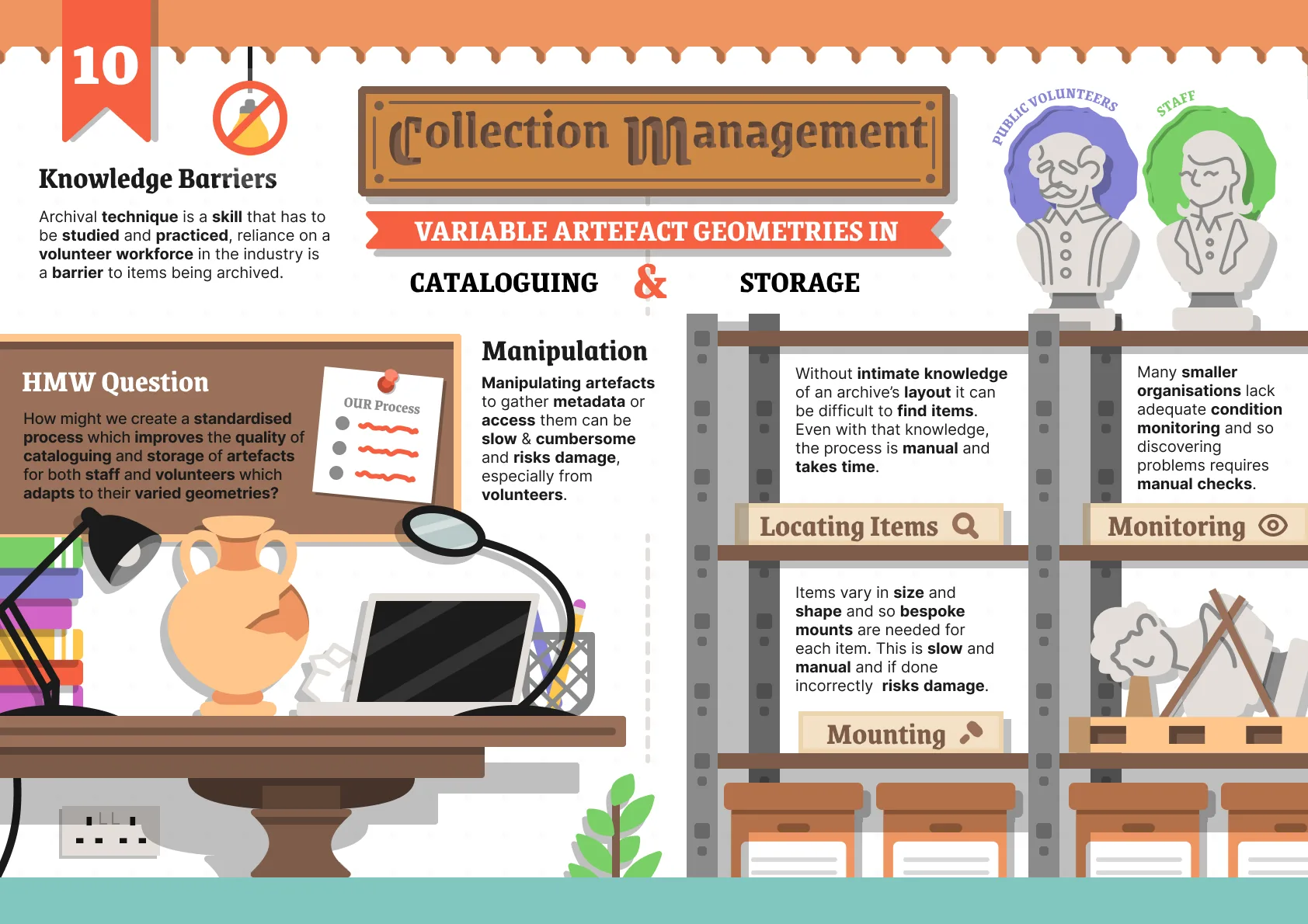
Collection management: knowledge barriers and variable artefact geometries in cataloguing and storage, covering manipulation, locating items, monitoring and mounting.
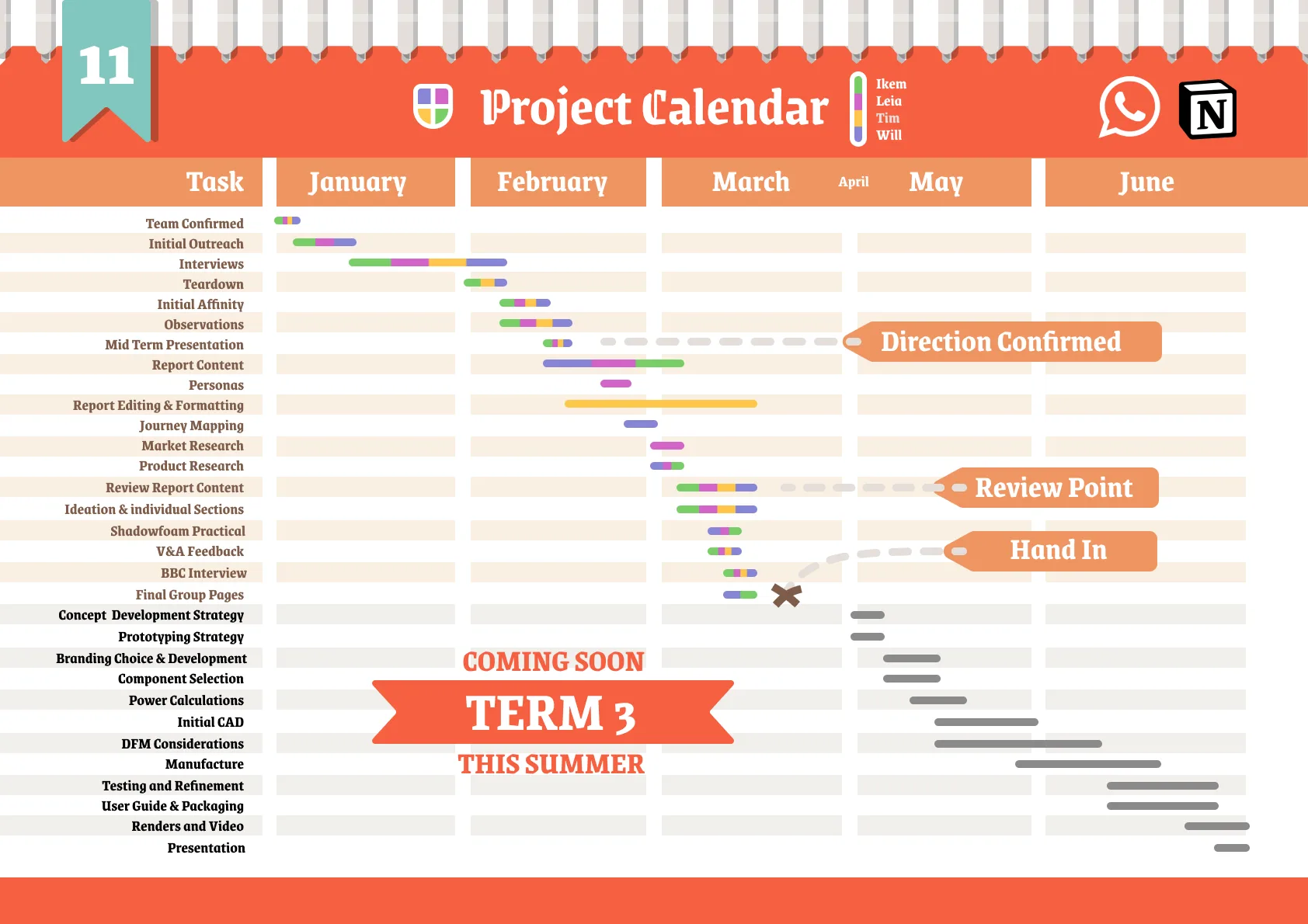
Project calendar from January to June showing research, reporting, ideation, prototyping and manufacture milestones for each team member.
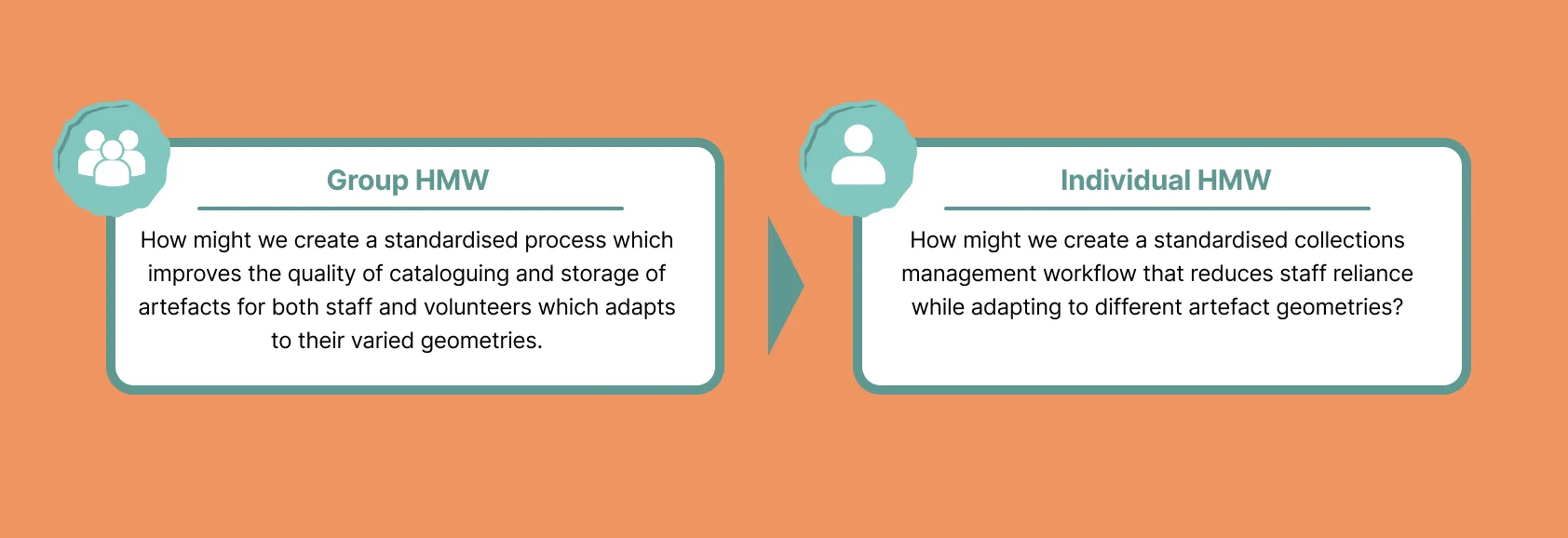
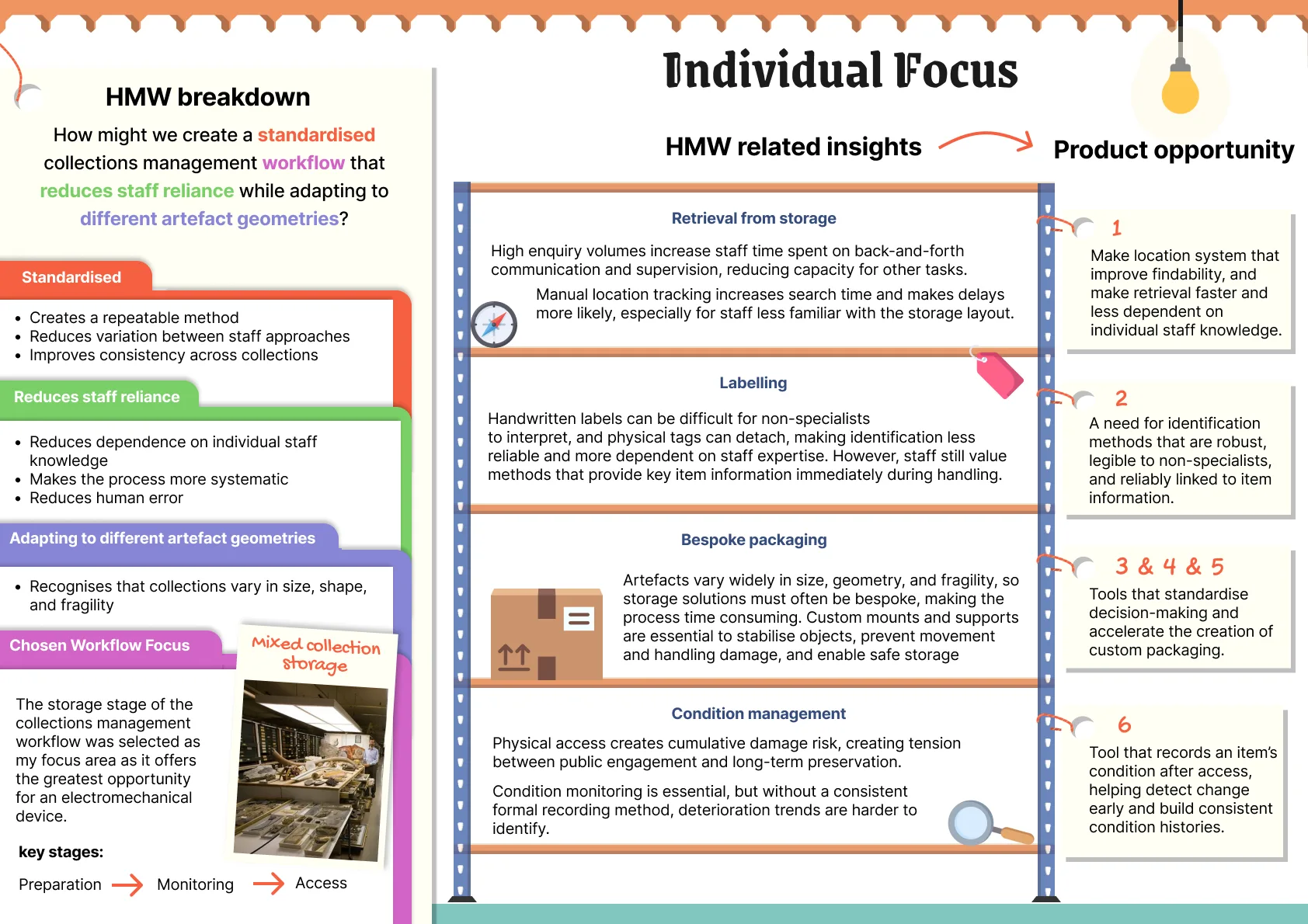
Group How Might We: create a standardised process which improves the quality of cataloguing and storage of artefacts for both staff and volunteers while adapting to their varied geometries. Individual How Might We: create a standardised collections management workflow that reduces staff reliance while adapting to different artefact geometries.
Individual focus: breaking down the How Might We into related insights and product opportunities, choosing bespoke packaging within the collections management workflow.
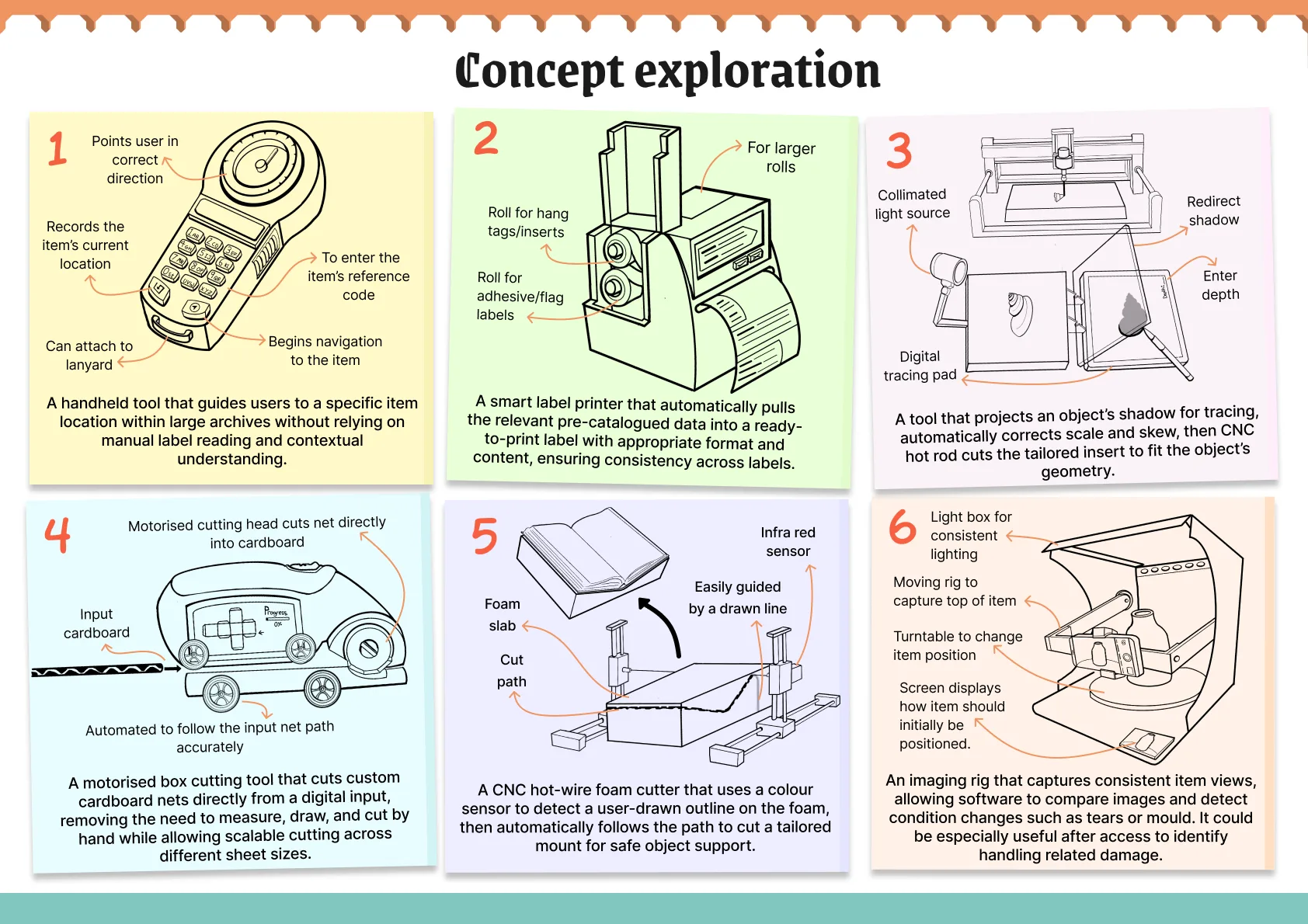
Concept exploration: six concepts including a location tracker, a label printer, a photography light box, a tracing pad, a net-cutting machine and a foam-cutting tool.
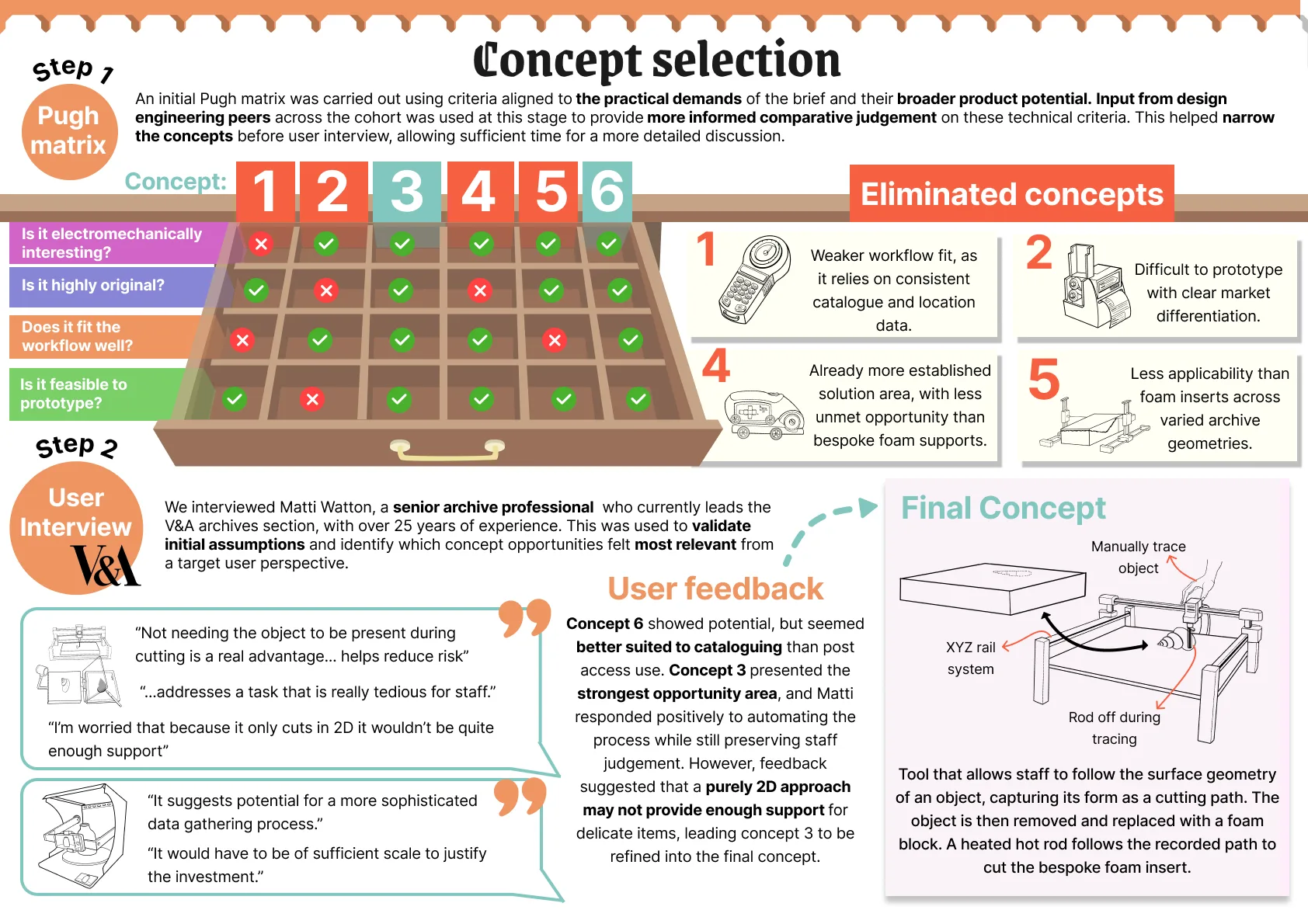
Concept selection using a Pugh matrix and a user interview with a senior archive professional, leading to the final concept: a tool that traces an object and cuts a bespoke foam insert.
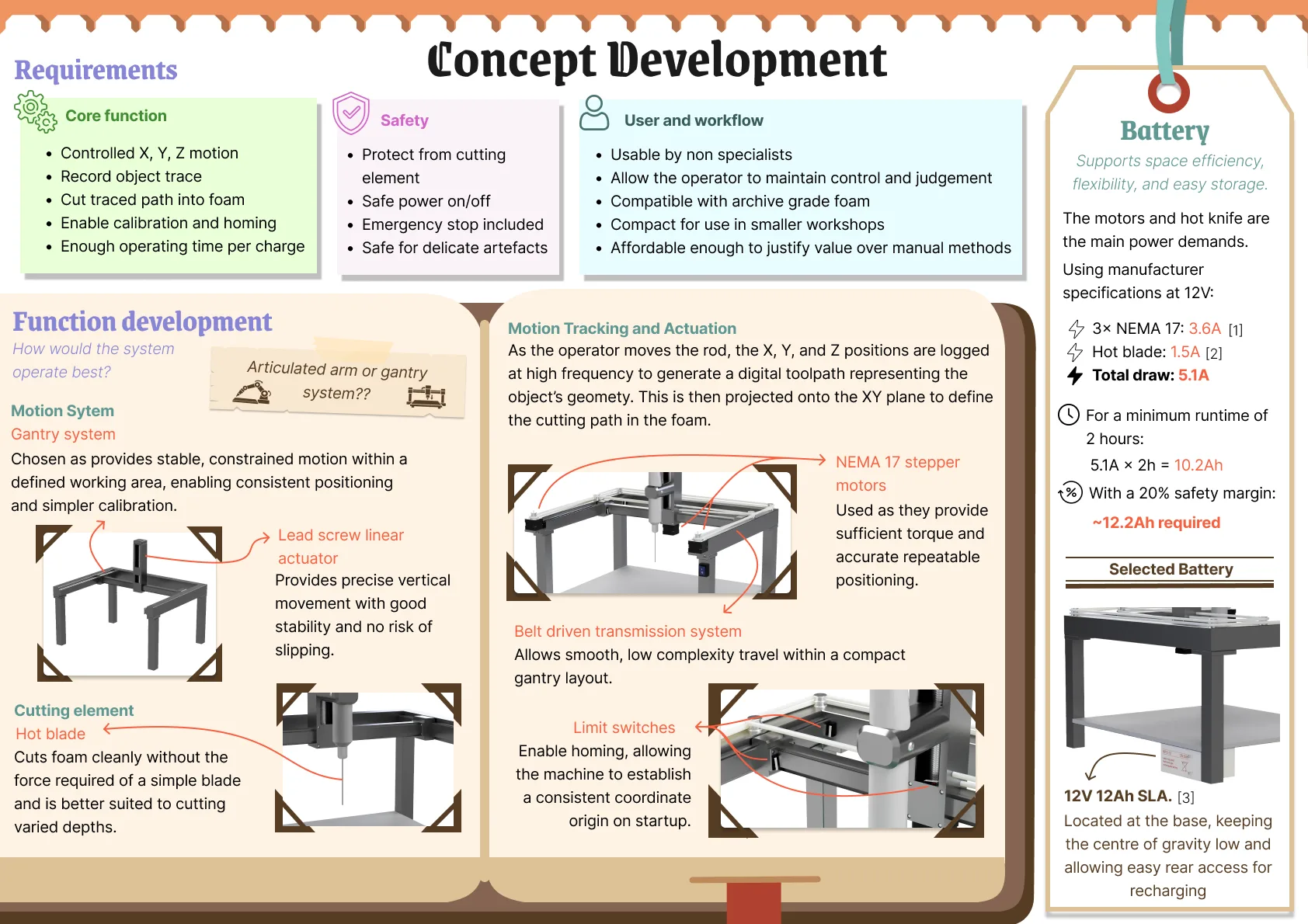
Concept development: requirements, function development, motion tracking and actuation with NEMA 17 steppers and a gantry, a hot blade cutting element, and battery sizing.
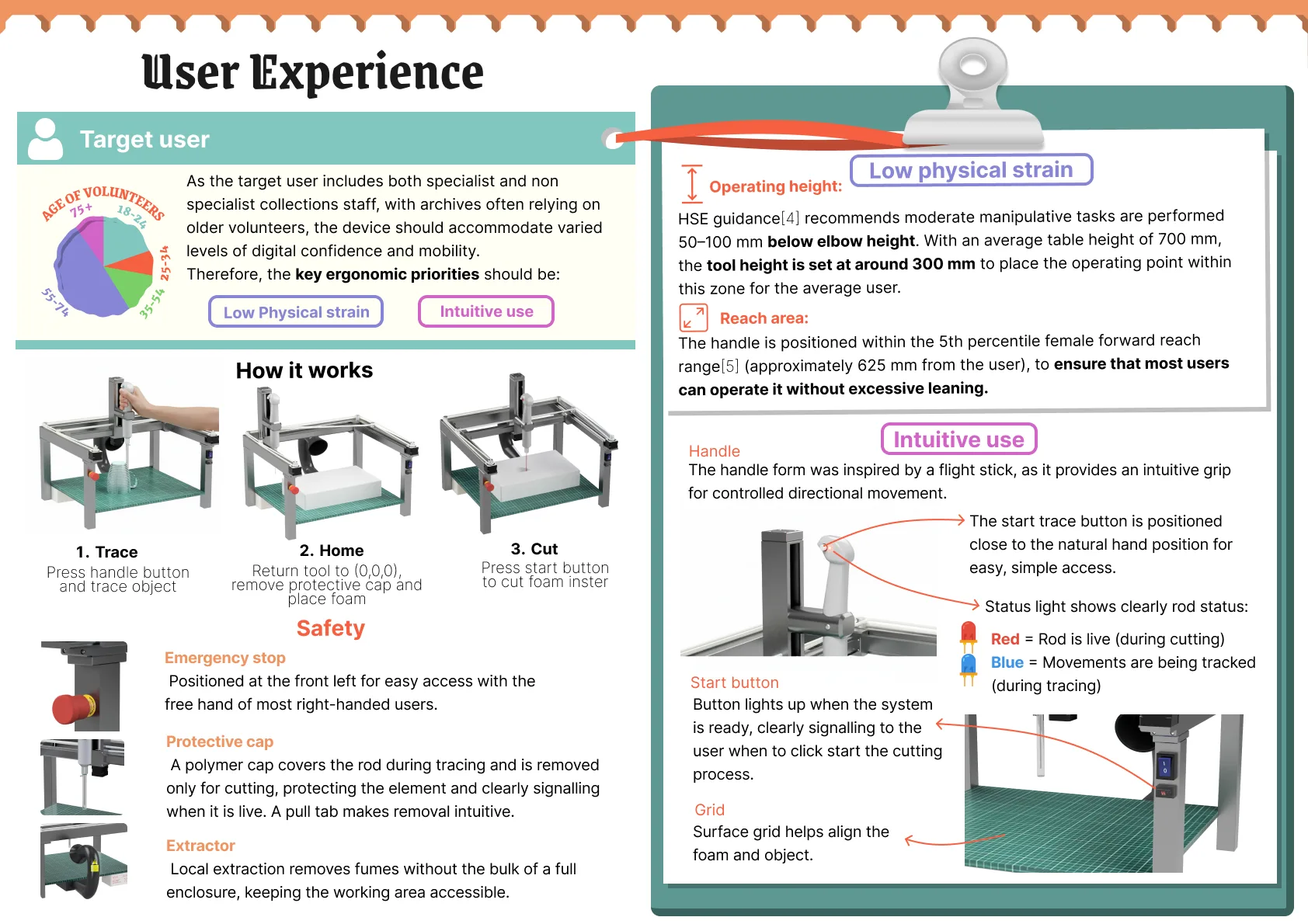
User experience: target users, operating height and reach, how it works in three steps (trace, home, cut), safety features and intuitive use.
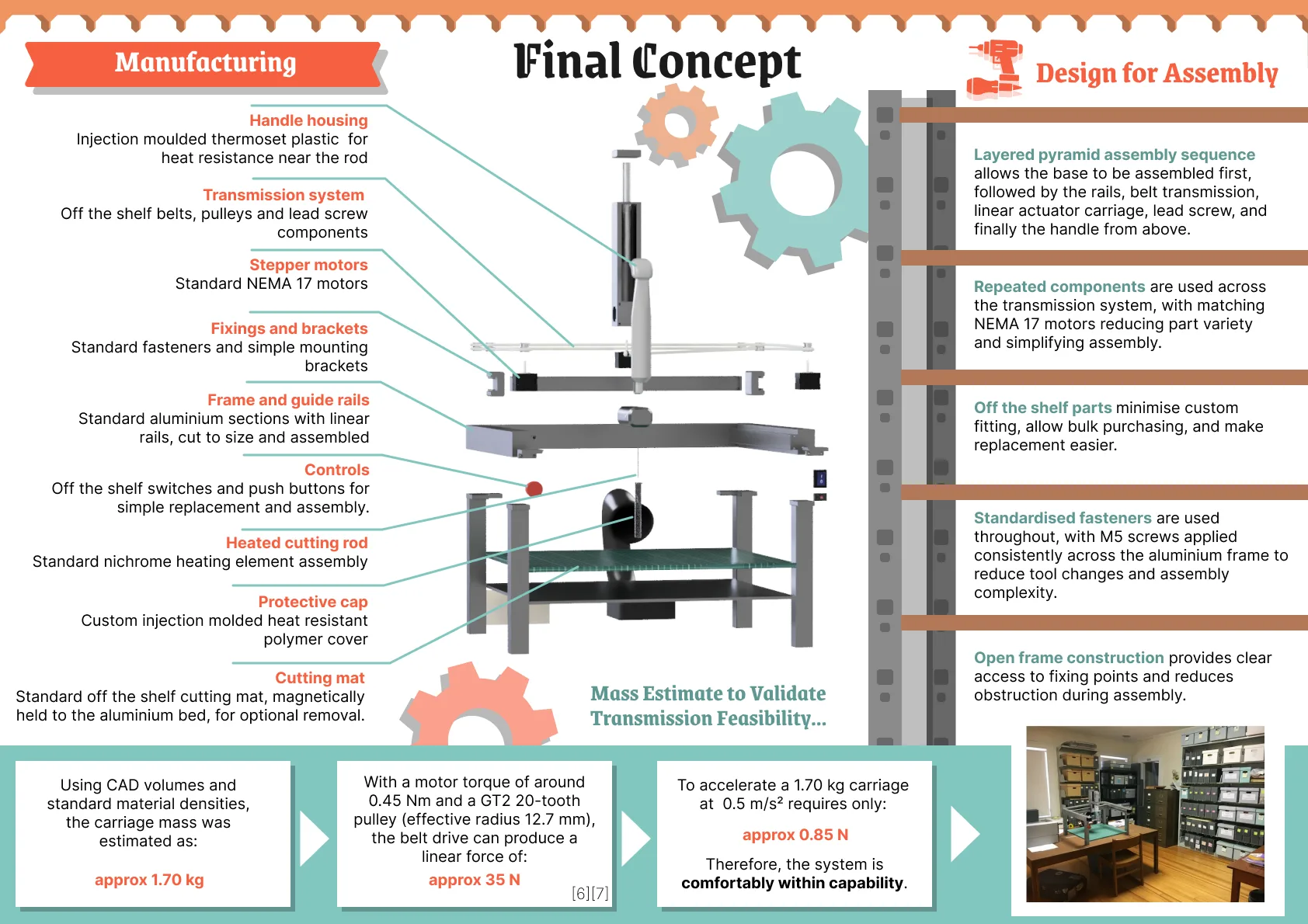
Final concept: manufacturing and design for assembly using standard components such as aluminium extrusions, NEMA 17 motors and a nichrome cutting rod, with a mass estimate validating the transmission.
Back to the start