Project overview

Aerodynamic SUV

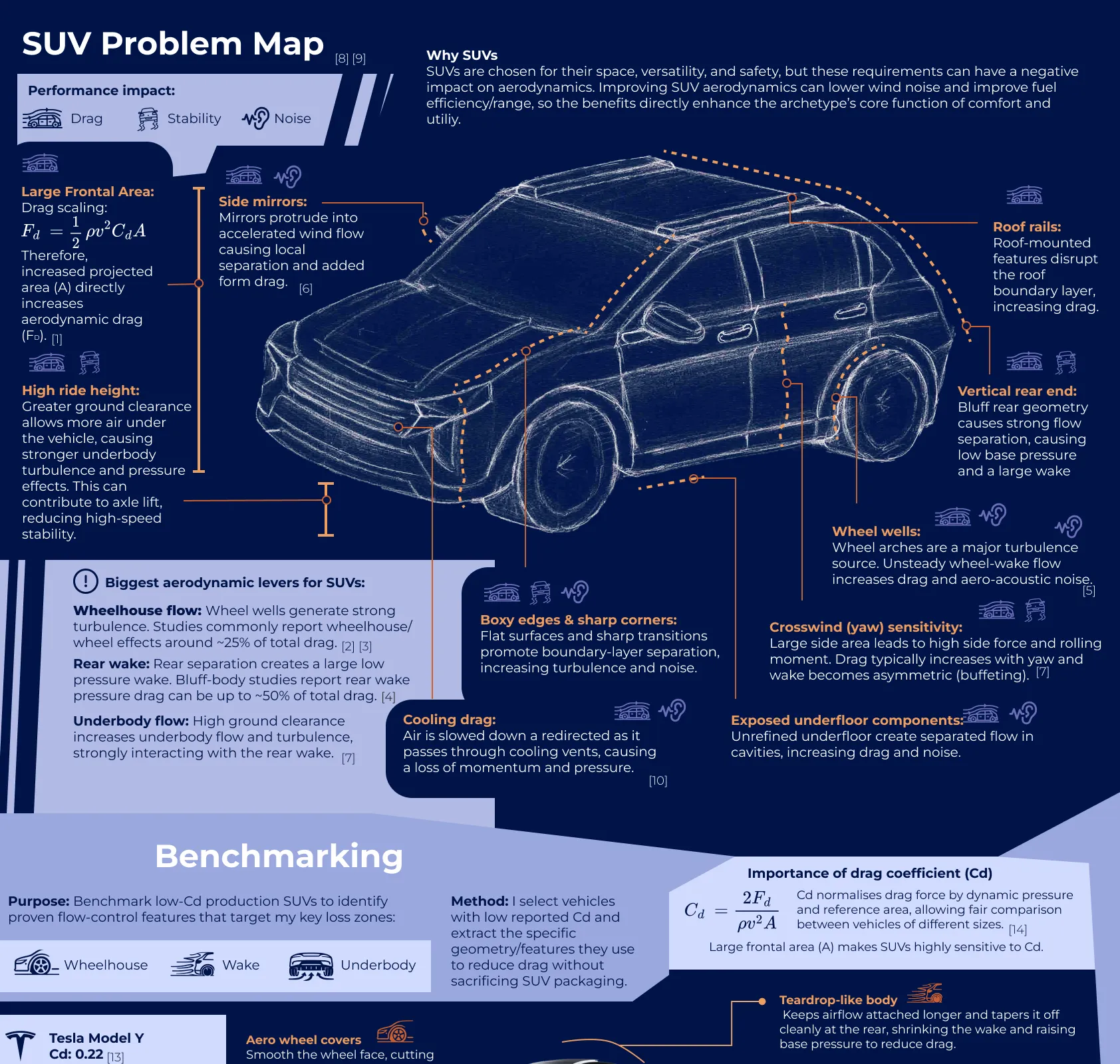
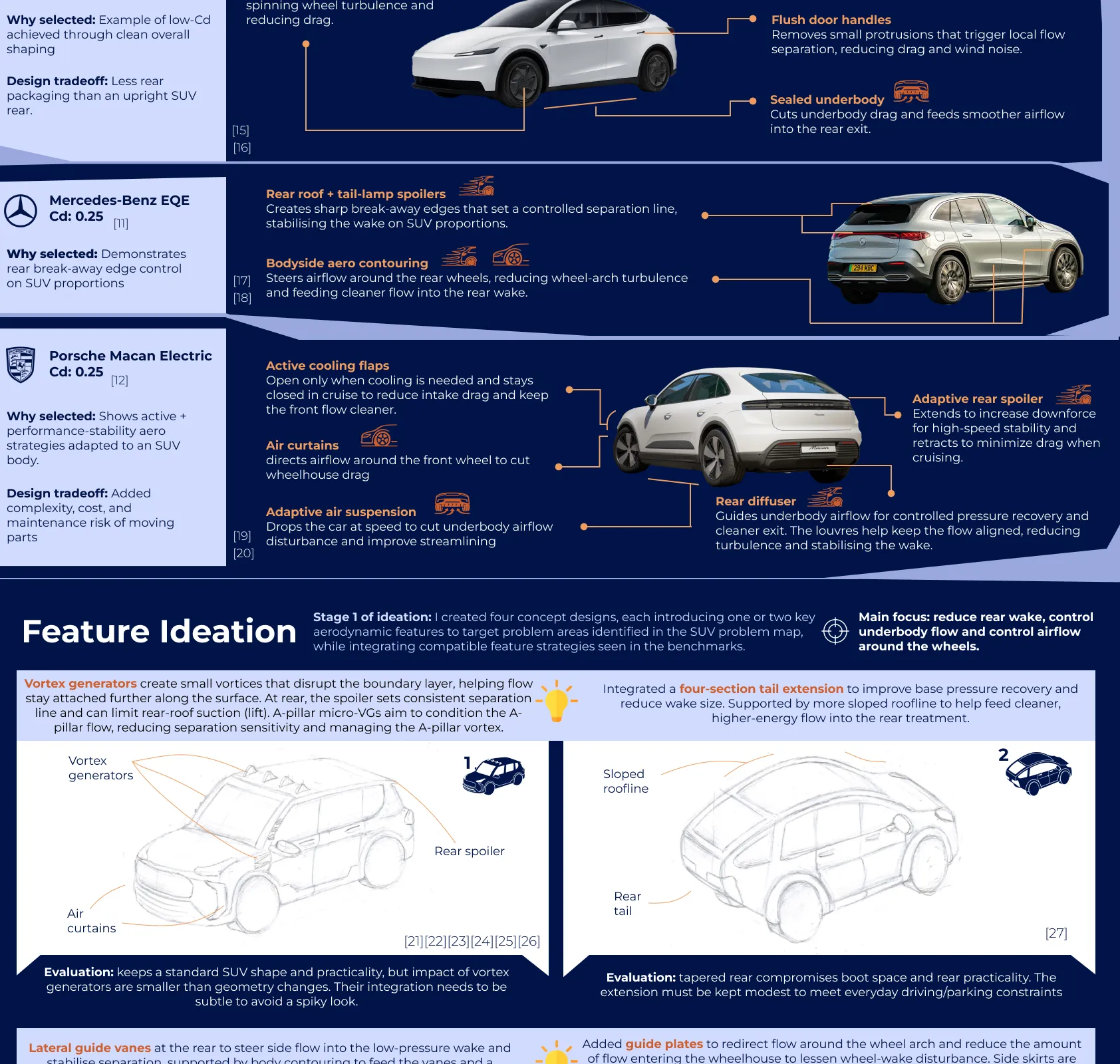
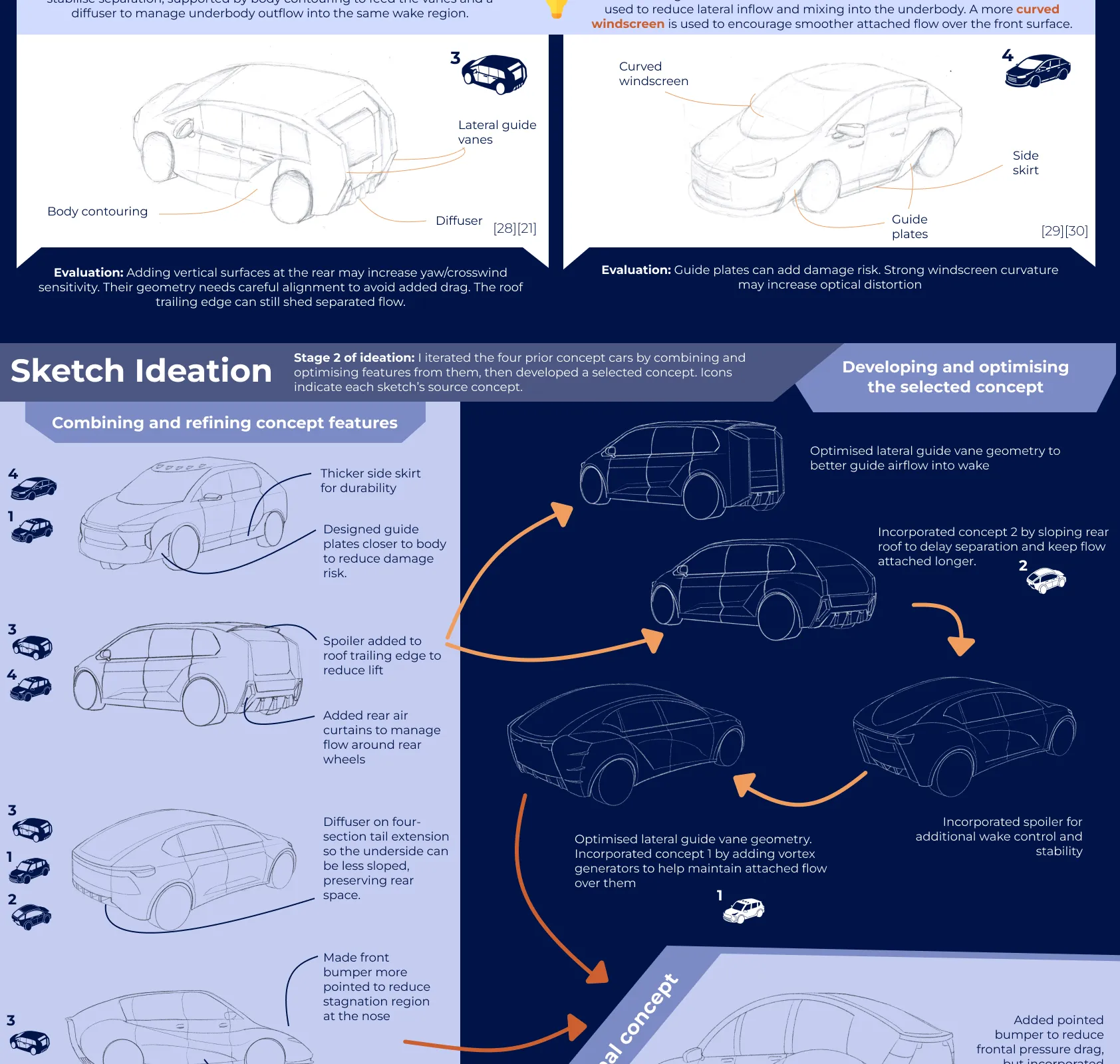
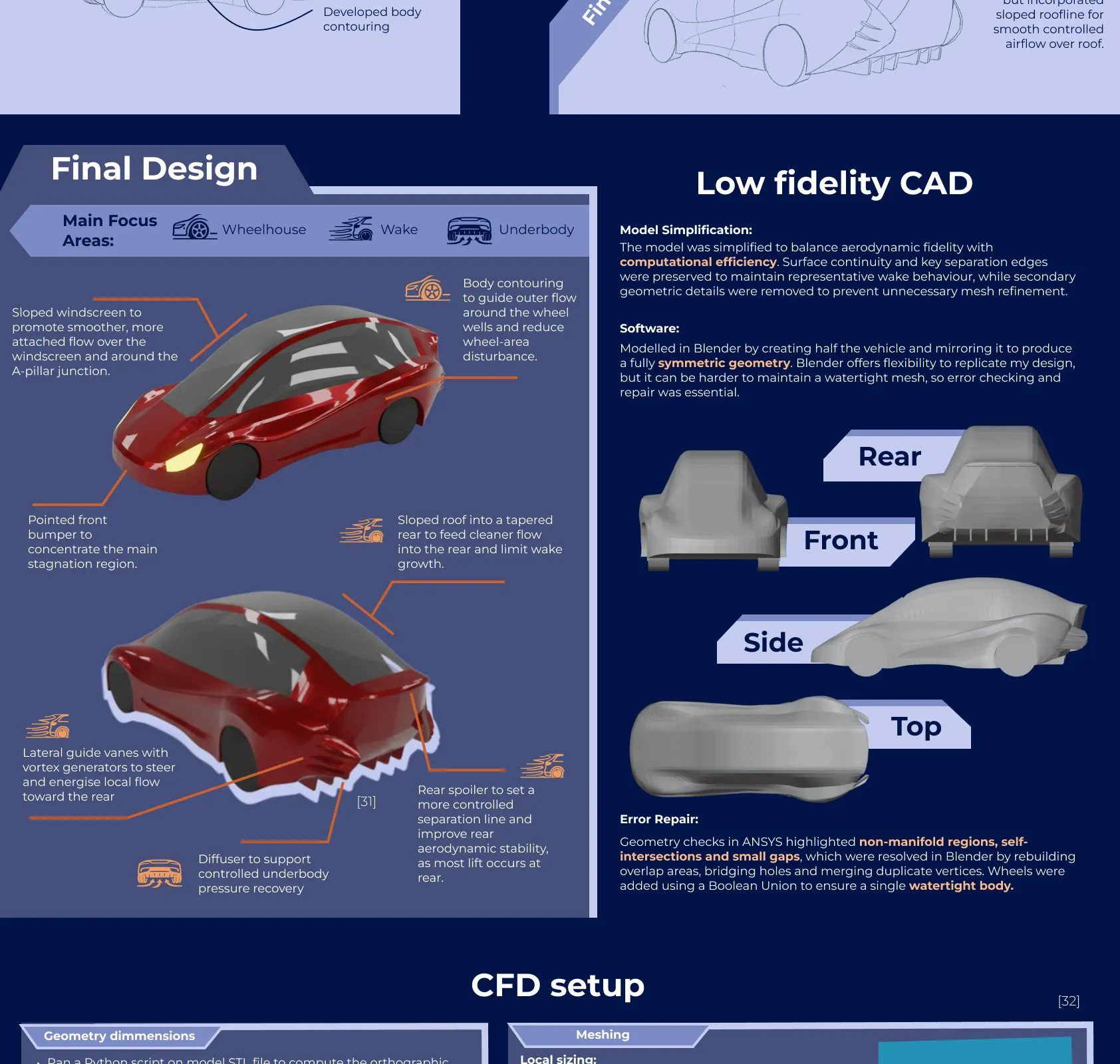
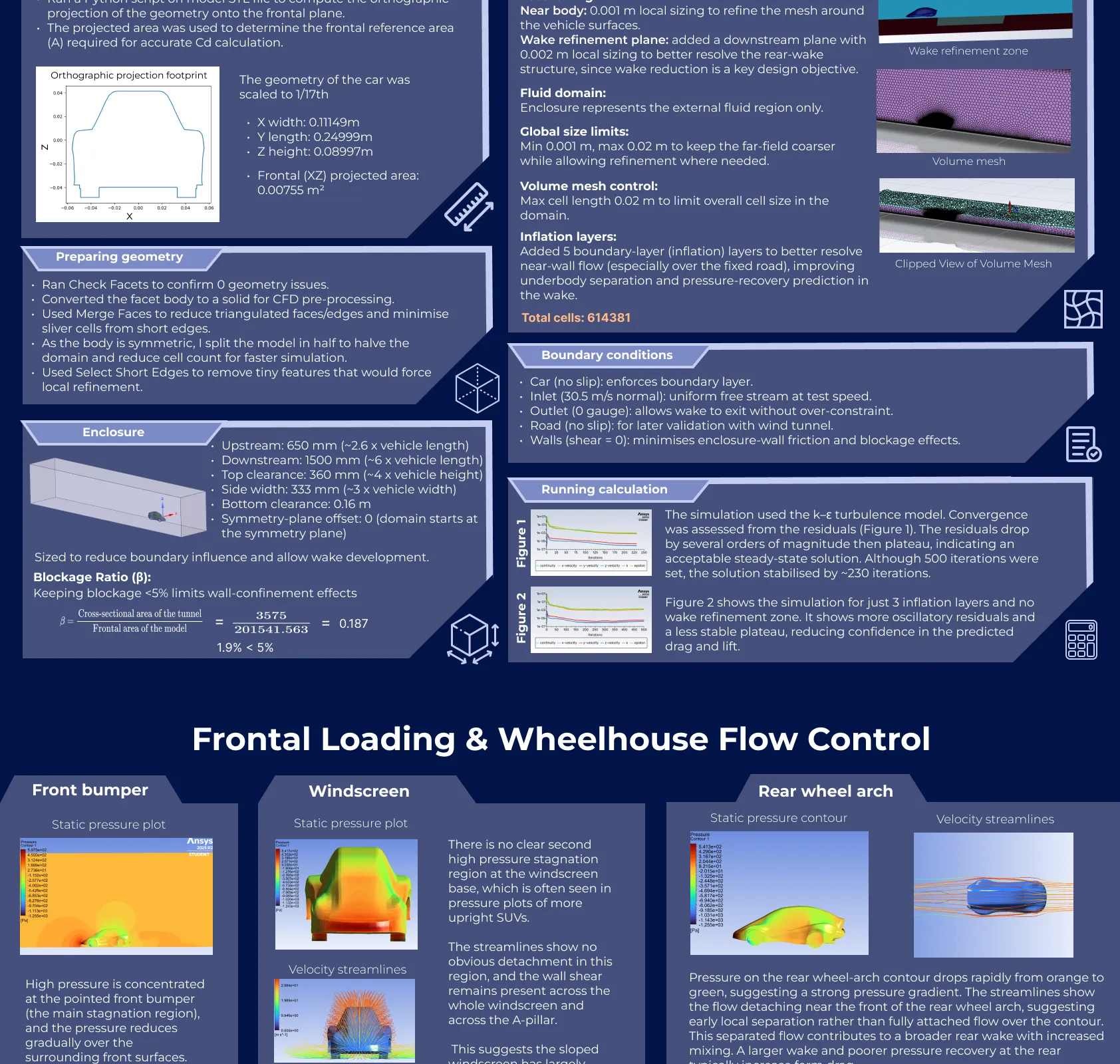
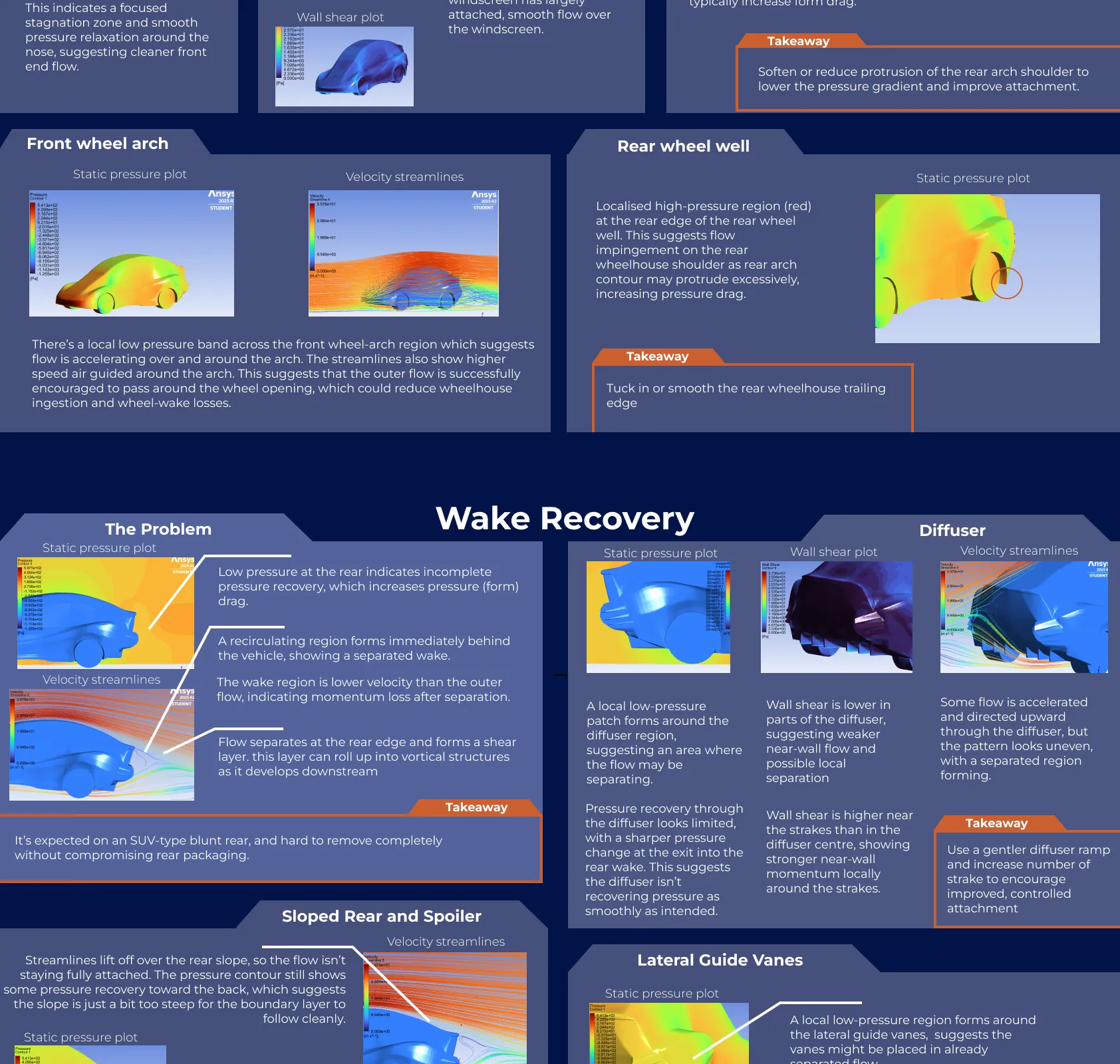
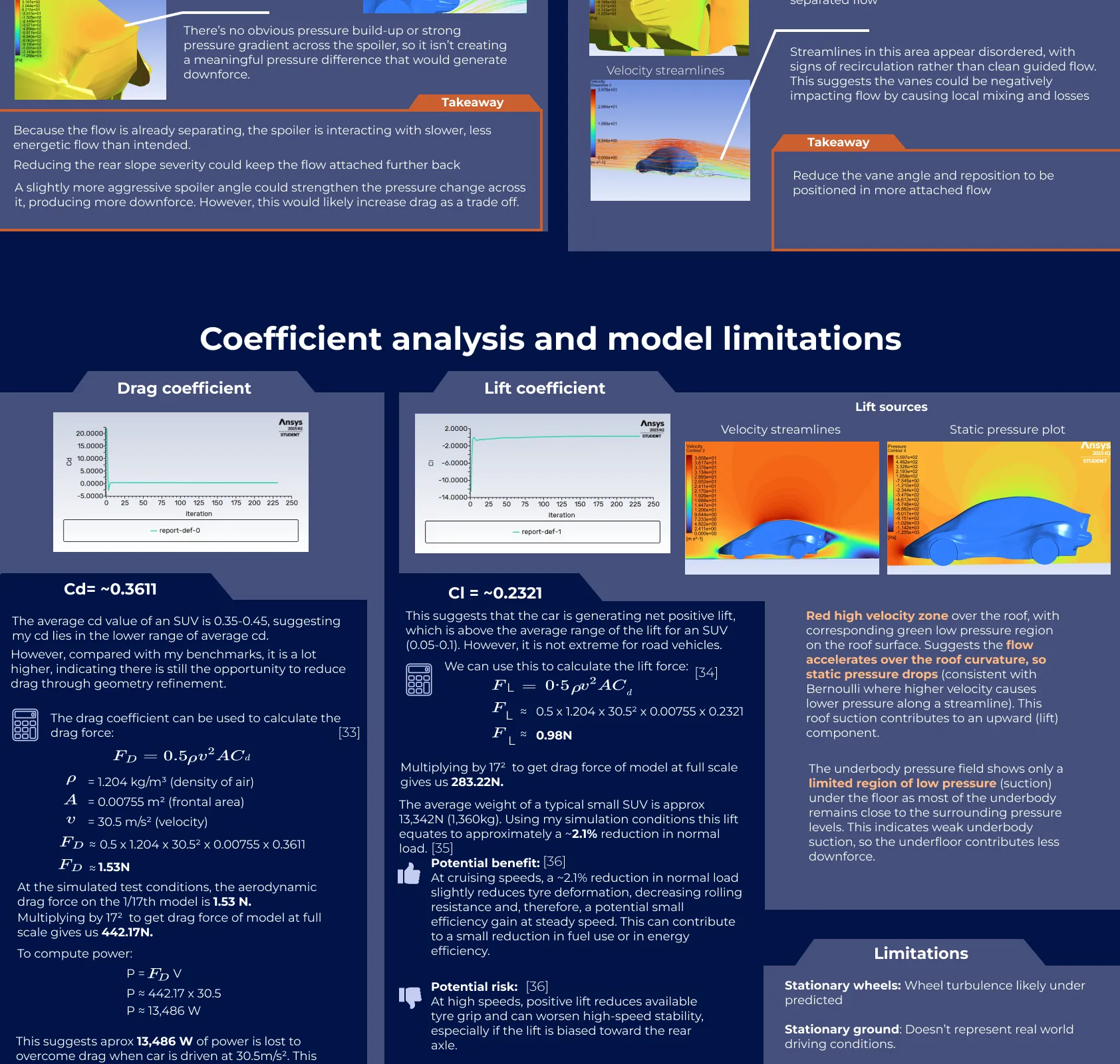
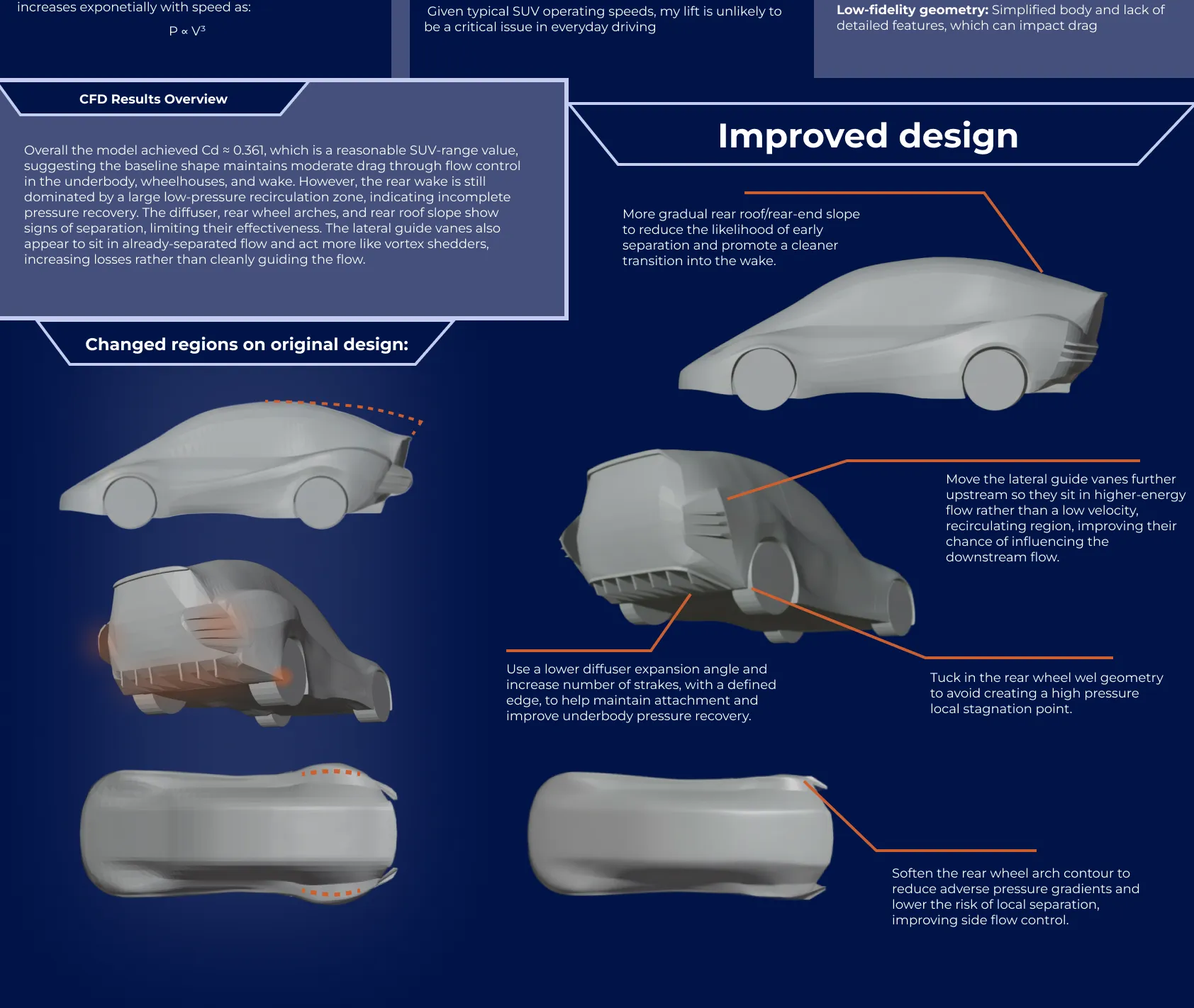
SUV problem map: performance impacts of large frontal area, side mirrors, roof rails, high ride height, wheel wells, underbody flow and the rear wake, with the biggest aerodynamic levers for SUVs. Benchmarking against the Tesla Model Y, Mercedes-Benz EQE SUV and Porsche Macan Electric, comparing drag coefficients and features such as aero wheels, rear roof spoilers, active grille shutters and diffusers. Feature ideation: rear spoiler, air curtains, lateral guide vanes and diffuser concepts, with evaluations of each. Sketch ideation: combining and refining concept features, developing and optimising the selected concept, leading to the final concept. Final design with its main focus areas, and low fidelity CAD built in Blender with simplified geometry for computational efficiency. CFD setup. CFD setup: virtual wind tunnel dimensions, meshing strategy, physics and solver settings, and running calculations. Frontal loading and wheelhouse flow control: front bumper, windscreen, rear wheel arch, front wheel arch and rear wheel analysis. Wake recovery: the problem, rear diffuser, sloped rear and spoiler, and lateral guide vanes, each with pressure and velocity plots and takeaways. Coefficient analysis and model limitations: drag coefficient about 0.361 and lift coefficient calculations, limitations, CFD results overview, changed regions on the original design, and the improved design.
Back to the start